
"Explore the AI-Empowered Series — your step-by-step guide to building, marketing, and scaling smarter with AI."

How to Use AI for Smarter Market Research
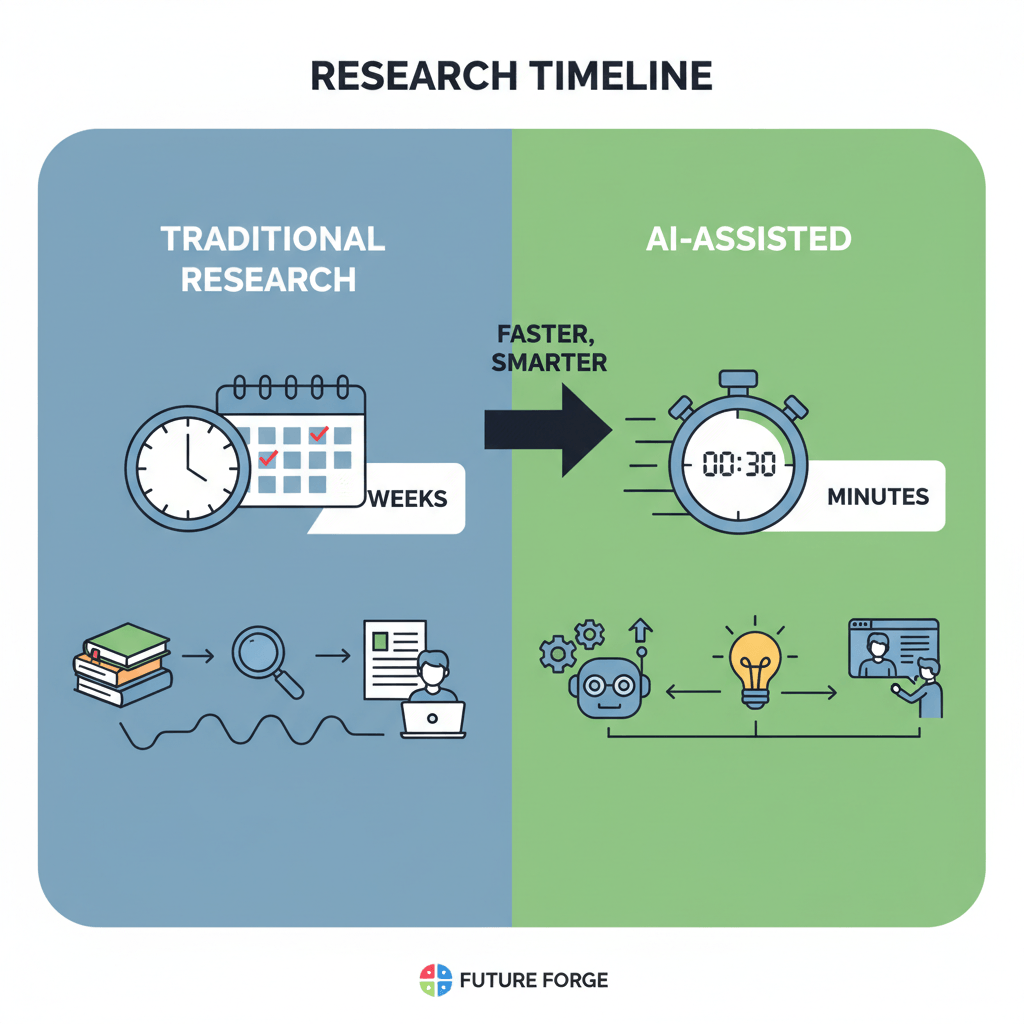
Solopreneurs can use AI to simplify market research. Learn practical workflows to understand your audience, analyze competitors, and spot trends faster—without a big budget.
Why Market Research Matters (Especially When You’re Solo)
Big companies have teams and budgets for research. Solopreneurs don’t—but that doesn’t mean you have to guess. AI tools compress hours of digging into minutes by summarizing reviews, grouping themes, and highlighting opportunities. The payoff is clarity: you choose the right offer, speak your customer’s language, and avoid building products no one asked for.
Step 1 — Start with Questions, Not Tools
AI is a powerful assistant, but it needs direction. Frame your research goals as specific questions:
• Who is my ideal client and what are their top 3 pain points?
• What outcomes are they willing to pay for right now?
• Which alternatives (competitors) do they already consider—and why?
• Where is demand rising or falling in the next 6–12 months?
Prompt to try: “You are a market researcher. Based on these questions and the notes below, create a research plan with sources, data to collect, and success criteria.”
Step 2 — Turn Raw Audience Signals into Insight
Your audience tells you what they want all over the internet. AI helps you hear it clearly:
• Forums & Communities: Copy threads from Reddit, Facebook groups, or Indie Hackers. Ask AI to extract recurring problems, desired outcomes, and the exact phrases people use.
• Reviews: Paste 30–50 Amazon/Trustpilot/G2 reviews into AI. Request a sentiment summary (“loves vs. hates”) and a features wish list.
• Search Questions: Use AnswerThePublic or “People Also Ask,” then ask AI to cluster questions into themes and buying stages.
• Google Trends: Pull a few rising terms and ask AI to explain why interest is changing and how that affects your niche.
Step 3 — Analyze Competitors (No Spy Gear Needed)
You can map the competitive landscape in an afternoon:
• Positioning: Paste a competitor’s homepage into AI. Ask: “Summarize their value proposition, target audience, differentiation, and pricing signals.”
• Content Strategy: Feed a list of their last 20 blog titles or YouTube videos. Ask AI to infer their content pillars and gaps.
• Social Proof: Summarize case studies and testimonials—what outcomes do they emphasize? What objections do they defuse?
• SEO: Use SurferSEO/Ubersuggest to gather top keywords; paste the list into AI and ask for opportunity clusters where competition is lower.
Step 4 — Forecast Trends and Reduce Risk
Trend sensing isn’t guessing; it’s synthesizing multiple weak signals:
• Feed AI a pack of articles, industry reports, and newsletters; ask for a 5-bullet executive brief plus “what this means for solopreneurs.”
• Build a simple ‘trend tracker’ in Notion: log customer requests, objections, and idea snippets. Use Notion AI to generate monthly themes.
• Scenario planning: Ask Claude/ChatGPT, “If [trend] accelerates, what offers become more/less valuable? What should I test next quarter?”
Step 5 — Capture the Voice of the Customer with Lightweight Research
You don’t need a giant survey. Try this:
• A 3-question intake form on your site (“What’s your #1 challenge?”, “What have you tried?”, “What would success look like?”).
• Short exit/intake interviews transcribed with AI; ask for themes and exact quotes for copy.
• Tag emails and DMs by topic; have AI summarize monthly to reveal rising pains and language to reuse in headlines.
Step 6 — Turn Findings into Decisions (and Tests)
Insights must translate into action. Use AI to write a one-page decision brief:
• The Opportunity: What we learned (evidence + quotes)
• The Bet: The smallest test that could validate demand
• The Plan: Offer, audience segment, channel, and success metric
• The Risks: What could go wrong and how we’ll mitigate it
Then run a 2–3 week experiment (landing page, price test, lead magnet) and review results with AI-generated summaries.
Mini Case Study — From Guesswork to a Validated Offer
A freelance designer wanted to pivot into brand strategy but wasn’t sure where demand lived. She:
1) Pasted 60 Reddit/FB comments about “DIY branding” into AI to extract pain themes.
2) Compared three competitor sites—AI highlighted that none offered a 2-week “brand sprint.”
3) Used Ubersuggest data; AI clustered keywords around “brand positioning for solopreneurs.”
4) Wrote a decision brief and launched a waitlist page with AI-polished copy.
Outcome: 47 sign-ups in 10 days, two paid pilot clients, and a clearer message. Research didn’t take months—just a focused weekend.
Common Pitfalls (and How to Avoid Them)
• Vague Prompts → Vague Answers: Give AI constraints, context, and examples.
• Cherry-Picking: Ask AI to include counter-evidence and disagreements.
• Copycat Positioning: Use research to differentiate, not imitate.
• Privacy & Ethics: Don’t paste sensitive data; anonymize inputs and follow platform rules.
Call to Action
Block two hours this week for a “research sprint.” Bring one idea, gather five signals (reviews, forums, trends, two competitors), and let AI summarize your findings into a one-page brief. Then run a tiny test. Insight → action is where momentum lives.
Want plug-and-play prompts and worksheets? Grab the AI Action Pack for ready-made research scripts, decision brief templates, and validation checklists.
Let us know what you think in the comments!
Categories
Newsletter
Subscribe to the newsletter and stay in the loop! By joining, you acknowledge that you'll receive our newsletter and can opt-out anytime hassle-free.
Created with ©systeme.io